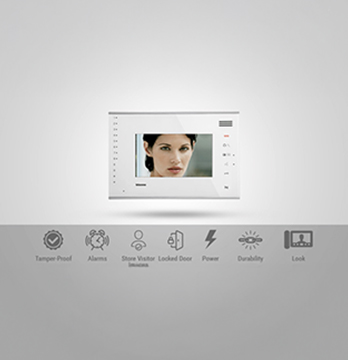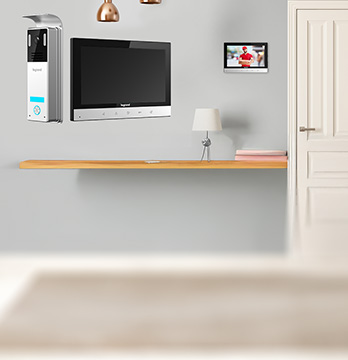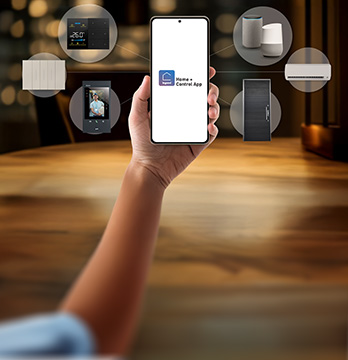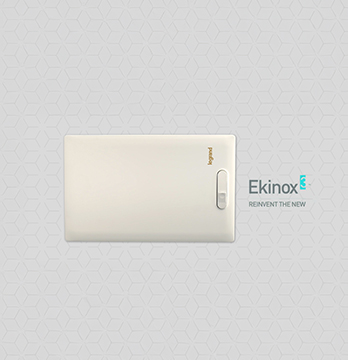



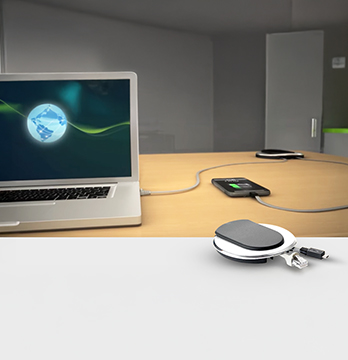
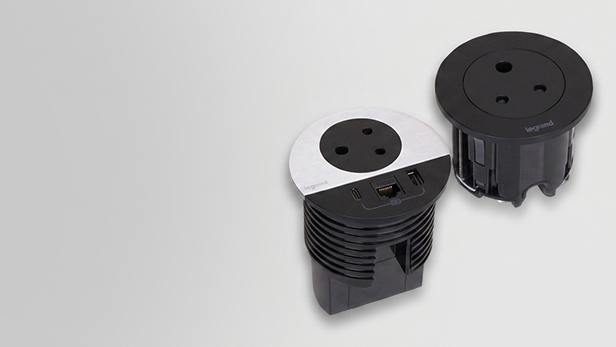
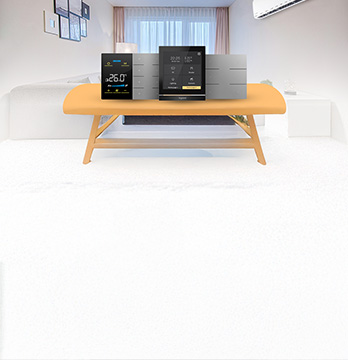
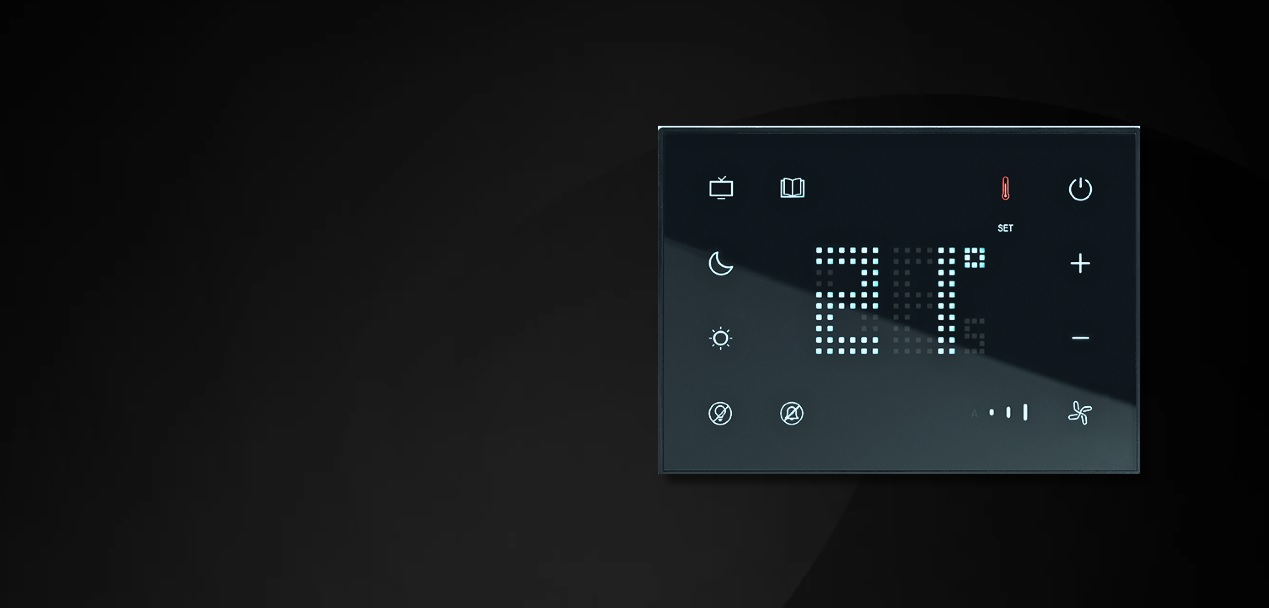
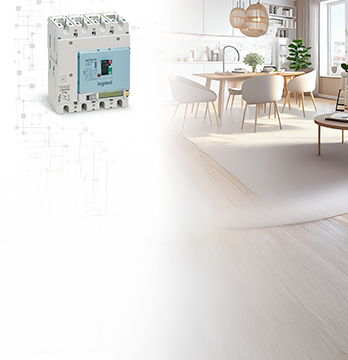
Range of accessories to enrich your living environment with enhanced user control
KNOW MORE
Range of accessories to enrich your living environment with enhanced IoT - based user


How edge infrastructure helps CIOs and CTOs run reliable, secure and manageable operations closer to where the business happens.
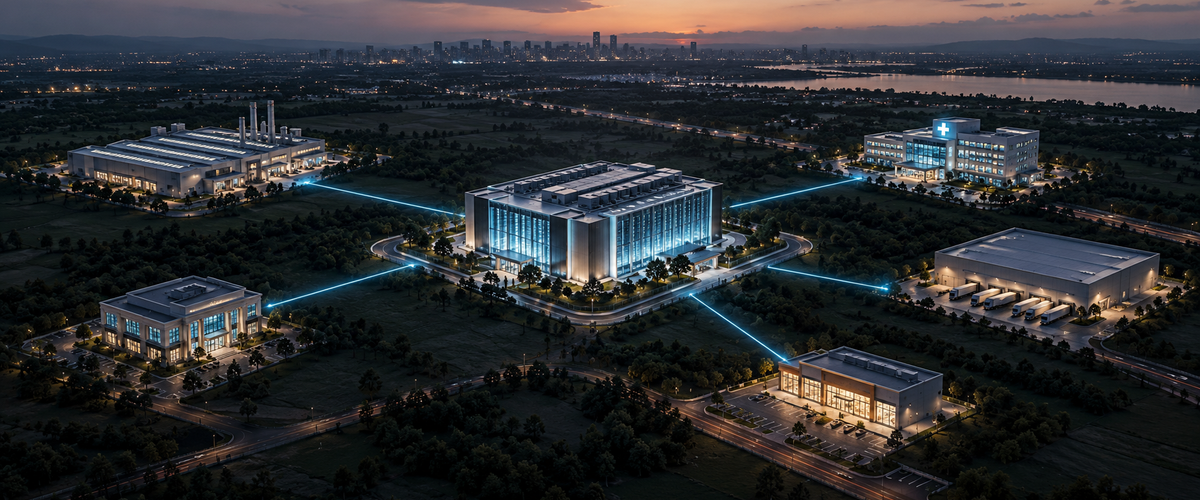
How edge infrastructure helps CIOs and CTOs run reliable, secure and manageable operations closer to where the business happens.
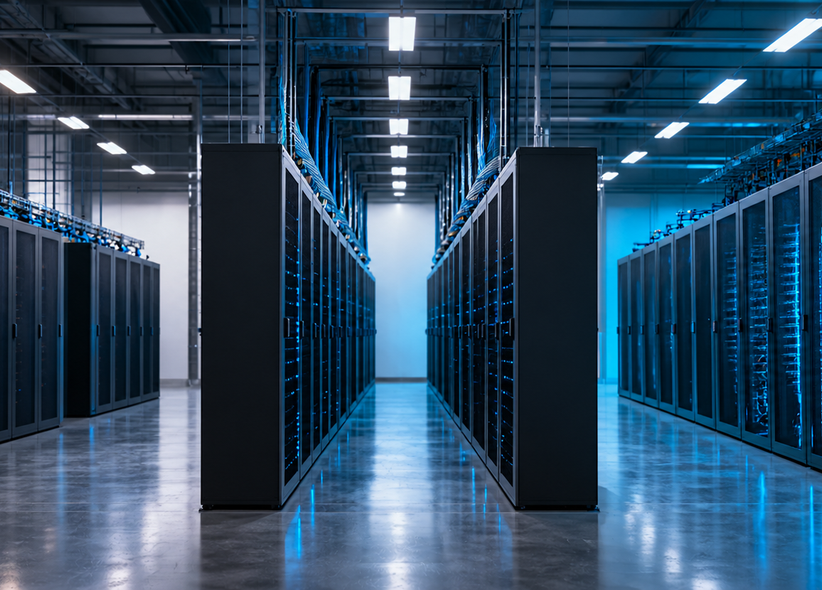
For more than a decade, enterprise IT was built around centralised data centres and cloud computing. Today, data is created in factories, bank branches, hospitals, stores, warehouses and campuses, and much of it needs to be processed close to where it is generated, particularly for applications that require low latency and continuous availability. That shift turns IT from one central function into a distributed operation. CIOs and CTOs now have to keep hundreds of small, often unstaffed sites running as reliably and securely as the core data centre. The real challenge is no longer any single technology. It is consistency at scale. This blog looks at the infrastructure challenges of managing distributed IT environments,what distributed infrastructure needs to deliver, why standardisation matters more than any single technology, and how Legrand’s EDC55 Micro Data Centre brings power, cooling, security and monitoring together in one compact solution.
Enterprise data no longer starts in the data centre. It is created on production lines, at branch counters, in hospital wards, at store checkouts and in warehouse loading bays, and much of it is most valuable in the moment it is created. That is why more processing is moving out to the edge.
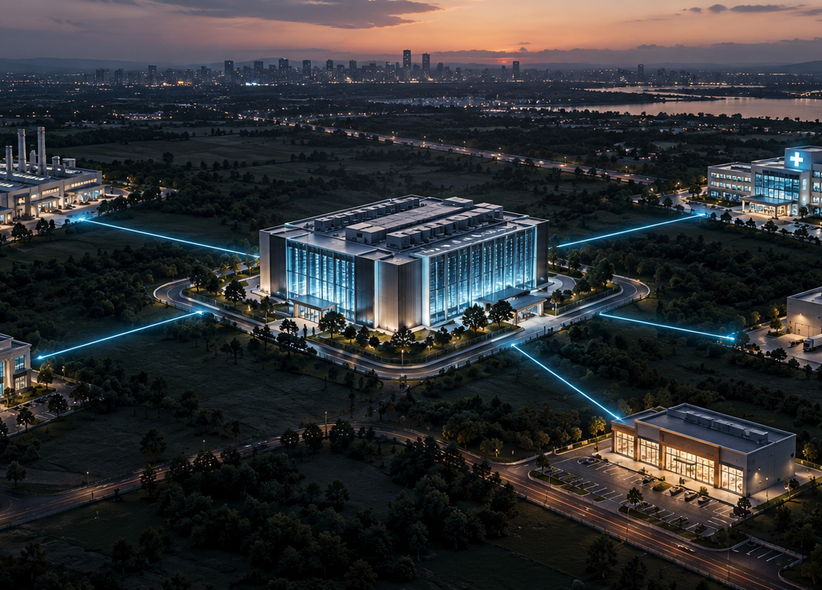
For the CIO and CTO, this changes the question. It is no longer only how to run a data centre well. It is how to run hundreds, or even thousands, of smaller edge locations across factories, bank branches, warehouses, hospitals, retail outlets and commercial buildings, often with no IT staff on site.
Each of those locations has its own operating conditions. A plant floor brings heat and dust. A bank branch has little space and strict access controls. A remote warehouse may face unstable power and patchy connectivity. A hospital needs its local IT to stay protected and available. Yet the IT team is expected to deliver the same reliability, security and visibility at every site, usually from a central office far away.
Assembling individual components differently at every location does not scale under those conditions. Every custom build adds another design to document, secure, monitor and support. What every connected business needs is infrastructure that is integrated, standardised and remotely manageable
Across industries, the case for computing at the edge comes down to three needs.
01.Low-Latency Processing

Some decisions cannot wait for data to travel to a distant cloud and back. In manufacturing, connected production lines continuously monitor equipment health, and that data is most useful when it is processed on the plant floor, in real time. In retail, stores analyse consumer behaviour as it happens, and local processing gives faster application response times for customers and frontline staff. In logistics, filtering and processing fleet and warehouse automation data locally reduces network traffic and cloud data transfer costs.
02.Operational Continuity
Edge applications have to keep running when conditions are not ideal. Locally hosted applications can continue operating during WAN (Wide Area Network) disruptions when designed to function independently of external connectivity. , and warehouse operations continue even when connectivity is intermittent.
In healthcare, hospitals and healthcare centres increasingly run connected medical devices and AI-assisted diagnostics on local IT. These workloads place clear demands on the infrastructure that hosts them: dependable power protection, controlled cooling and physical security, often in spaces that were never designed as data rooms.
03.Remote IT Management
Most edge sites will never have an IT specialist on site, so they have to be visible and manageable from the centre. In banking and financial services, keeping sensitive operational data within local environments helps organisations meet regulatory and data sovereignty requirements, while secure enclosures and physical access monitoring show IT teams who is reaching critical systems without being at every branch. In education, a standardised, remotely monitored setup lets a central IT team support multiple campuses without a team at each one. Across hundreds of retail stores, the same approach keeps every location consistent.
No single component solves the edge challenge. A better UPS or a more efficient cooling unit helps one site; it does not make a thousand sites easier to run. What makes the difference is a repeatable design: a common infrastructure architecture with configurations adapted to individual site requirements and the same monitoring view at every location, so that a site in one city can be deployed, supported and expanded the same way as a site in another.
Standardisation also gives IT teams a predictable baseline. When every site follows the same design, issues are easier to diagnose remotely, spares and service processes are simpler to plan, and new locations can follow a proven template instead of starting from scratch.
This is the thinking behind EDC55. The Legrand EDC55 Micro Data Centre is a factory integrated solution that combines rack infrastructure, intelligent power distribution and protection, cooling and environmental monitoring in a compact, secure enclosure. It is built for environments with limited space and minimal on site IT support, and it reduces the engineering effort needed to bring a new site online.
An edge site works only when power, cooling, physical infrastructure, connectivity and monitoring work together. Optimising them in isolation often leads to inefficiency, higher operating costs and limited scalability. EDC55 brings them together in five parts.
01. Power: Reliability Where It Matters
Edge locations often operate where power quality, quantity and continuity vary. UPS protection provides backup power for reliable edge operations, helping minimise downtime and keep business running across distributed sites.
02. Cooling: Precision Where It Matters
Edge IT is often deployed outside traditional data halls, in plant rooms, branch back offices and warehouse floors. Compact deployments there need precision cooling that keeps IT equipment within controlled thermal conditions. Integrated cooling with intelligent airflow management maintains those conditions, particularly in demanding operating environments.
03. Security: Protection Built In
Edge sites often have no dedicated IT personnel nearby. A secure enclosure with physical access and environmental monitoring protects critical infrastructure at the location itself.
04. Intelligent PDU: Control Where It Matters
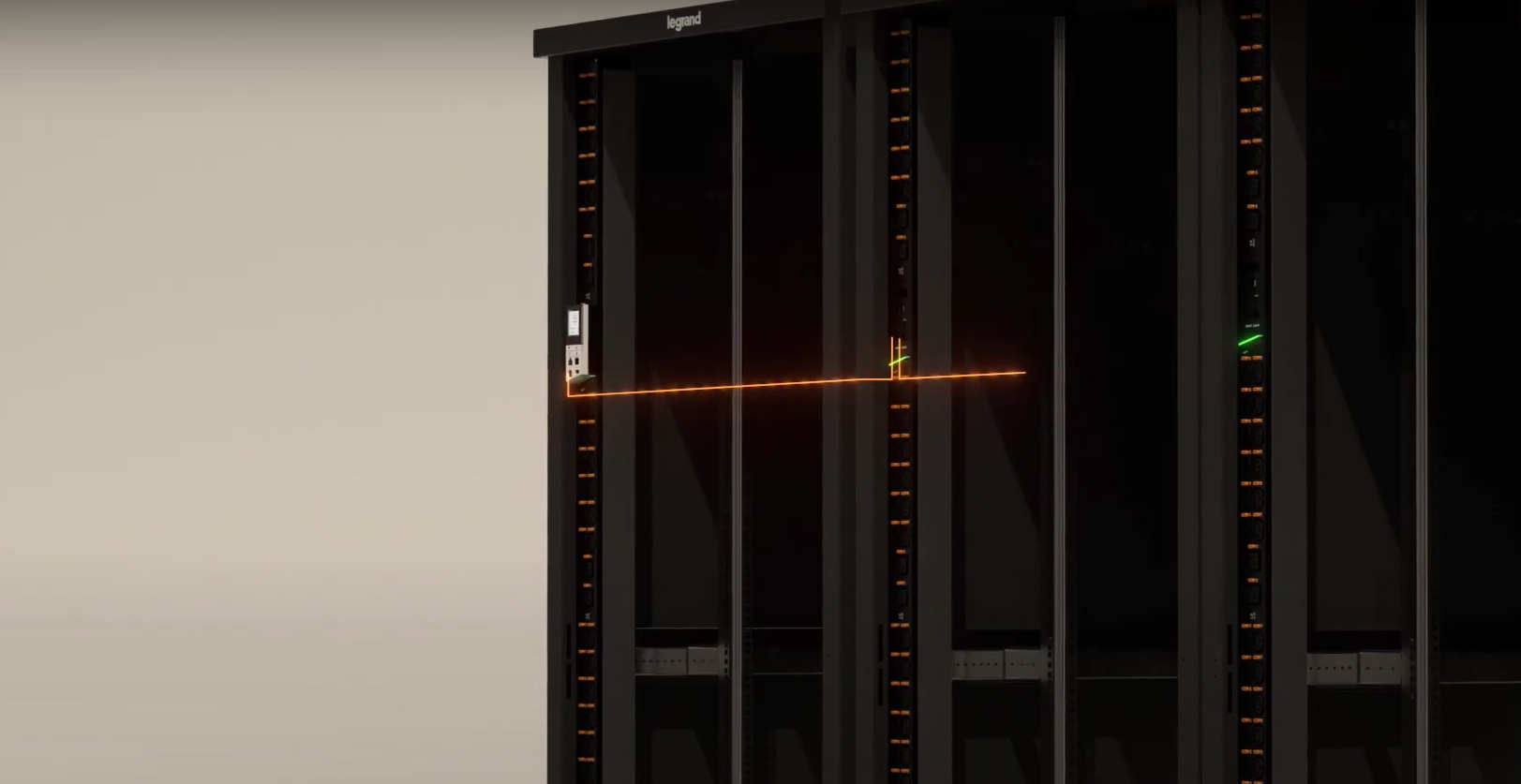
Intelligent Rack PDUs provide real-time power distribution and monitoring. Combined with centralised monitoring of temperature, humidity and equipment health, IT teams can detect issues early and reduce site visits.
05 .Integration: Everything Works Together

Power, cooling, security and monitoring come integrated in one solution, factory-built and pre-engineered. The architecture is designed and validated once, rather than re-engineered for every location, which reduces repeated engineering effort for IT and project teams. On site, deployment is simpler because teams install a known, pre-engineered system instead of sourcing and coordinating separate components. And because every location follows the same design, IT teams get consistency across sites: the same configuration to support, the same monitoring view and the same approach to adding new locations.
Edge computing will not replace the cloud or the central data centre. It extends them. Gartner expects 90% of organisations to adopt a hybrid cloud approach through 2027, and edge locations will work alongside core data centres as one distributed ecosystem. The market reflects this: the global edge computing market is estimated at USD 28.5 billion in 2026 and is expected to reach USD 263.8 billion by 2035, according to Global Market Insights.
Not every location needs the same capacity. A small branch and a production plant run very different loads. EDC55 is available in configurations from 3.5 kW to 55 kW, so each site can be sized to its workload while the infrastructure architecture and management principles stay consistent across every location.
The organisations that scale well will be the ones that standardise deployments and manage them through remote monitoring and lifecycle services, instead of treating each site as a separate project.
Connect with our Data Center experts. We go further.
What is edge infrastructure?
Edge infrastructure is the compact, distributed computing environment placed close to where data is generated, such as factories, branches, warehouses and hospitals. It combines power, cooling, secure enclosures, connectivity and monitoring so that applications can run locally.
Why is managing distributed IT locations difficult?
Sites are spread across varied locations, often without on-site IT staff, and face inconsistent power, heat, dust, limited space and fluctuating connectivity. Standardised, integrated and remotely monitored infrastructure addresses these challenges.
What is the Legrand EDC55?
EDC55 is a factory-integrated Micro Data Centre that combines rack infrastructure, intelligent power distribution and protection, cooling and environmental monitoring in a compact, secure enclosure.
Does edge replace the cloud?
No. Edge extends cloud capabilities by enabling low-latency decisions and reducing bandwidth consumption, while the cloud remains essential for large-scale analytics, AI model training and long-term storage.

Beyond Bandwidth: How AI Is Rewriting the Physical Connectivity Layer
READ SMART SPACE











 Eliot
Eliot LDCS
LDCS


 Residential
 Commercial
 Hospitality
 Industrials





 Data Center Solutions
 Hyperscale data centers